
Done With Hustling? Why Young Indians Are Choosing The ‘Soft Life’
Free Press Journal article explores how young Indians are increasingly moving away from hustle culture and redefining success through balance, emotional well-being, and sustainable living. The article was triggered by the growing online resonance around comedian Samay Raina’s reflections on burnout, anxiety, and emotional exhaustion in his stand-up special Still Alive. His comments about valuing family, peace, and personal life over nonstop hustle struck a chord with many young professionals navigating stressful work cultures.
The story highlights how Gen Z and younger millennials are questioning older definitions of success that glorified:
- Overworking
- Constant availability
- Burnout
- Weekend work
- Endless productivity
Instead, many young Indians today are prioritising:
- Mental health
- Emotional stability
- Work-life balance
- Rest and recovery
- Flexible work culture
- Meaningful relationships
- Sustainable ambition
The article includes voices from students, professionals, recruiters, workplace experts, and mental health specialists who explain that ambition has not disappeared — it is simply becoming more human and balanced.
Experts quoted in the article also note that younger professionals increasingly value:
- Peace over prestige
- Boundaries over burnout
- Flexibility over rigid corporate culture
- Emotional well-being alongside career growth
The broader message is that the “soft life” trend is not about laziness or lack of ambition, but about rejecting toxic productivity and building healthier lifestyles.
Dr. Kshitij Mody’s Contribution
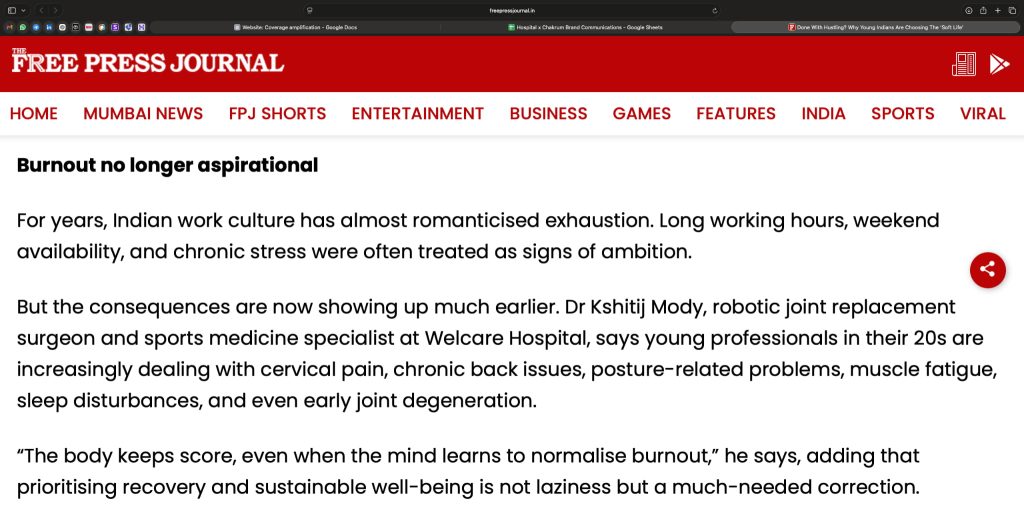
Dr. Kshitij Mody, from Welcare Hospital, spoke in the article about the physical consequences of modern burnout culture on younger adults.
He observed that many professionals in their 20s are already experiencing:
- Cervical pain
- Chronic back issues
- Posture-related problems
- Muscle fatigue
- Sleep disturbances
- Early joint degeneration
According to him: “The body keeps score, even when the mind learns to normalise burnout.”
He emphasised that prioritising recovery, movement, rest, and sustainable well-being should not be viewed as laziness, but as a necessary correction to unhealthy modern work habits.