
How Modern Work and Lifestyles Are Changing the Way We Experience Pain
The Hindu article explores how modern work culture, digital lifestyles, stress, and constant connectivity are fundamentally changing the way people experience and process pain today.
The article explains that pain is no longer viewed only as a physical issue caused by injury or ageing. Increasingly, experts believe modern lifestyles are amplifying pain through stress, burnout, emotional overload, poor posture, sedentary habits, sleep disruption, and lack of recovery.
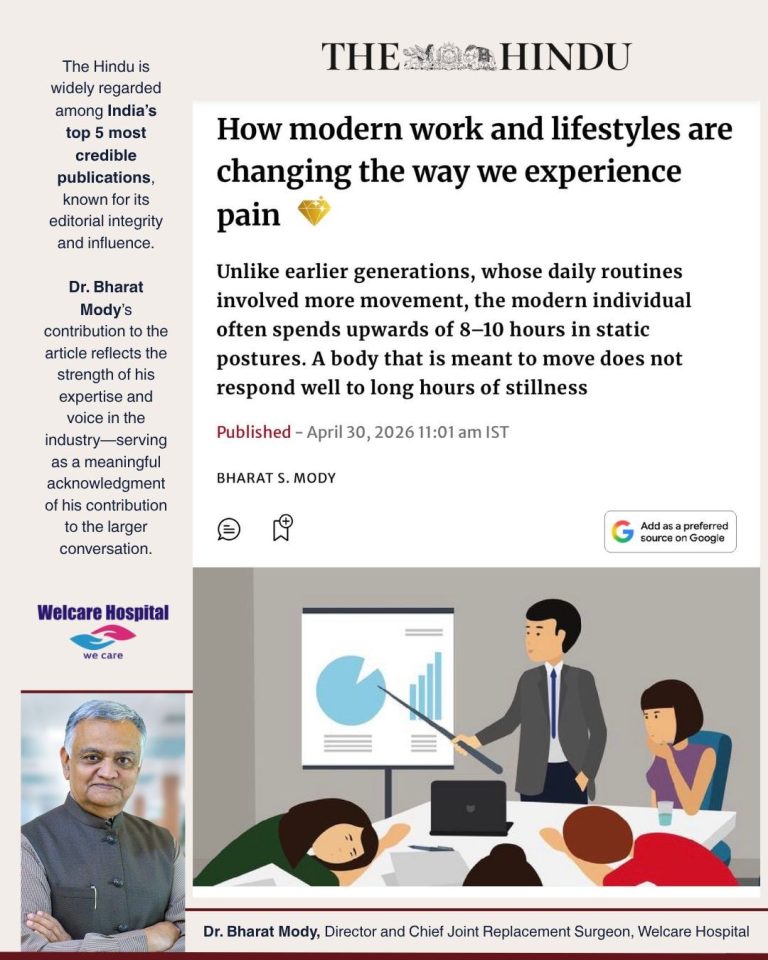
Key themes from the article include:
- Long desk hours, excessive screen exposure, and poor ergonomics are contributing to rising neck, shoulder, and back pain among younger adults.
- Constant digital connectivity and “always-on” work culture are increasing stress levels, which can heighten the body’s sensitivity to pain.
- Experts explain that pain is closely linked to the nervous system and emotional state — meaning anxiety, exhaustion, poor sleep, and mental overload can intensify physical discomfort.
- Modern work culture often normalises fatigue, burnout, and chronic stress, leading people to ignore early pain signals until they become long-term problems.
- Sedentary lifestyles, reduced movement, and lack of physical activity are weakening muscle support and affecting spinal and joint health.
- Remote work and blurred work-life boundaries are also changing how people recover physically and mentally.
The article highlights that chronic pain today is increasingly becoming a “lifestyle-linked condition” rather than only an age-related issue.
Dr. Bharat Mody quoted in the larger discussion around modern pain patterns emphasise that pain management now requires a more holistic approach involving:
- Better posture and ergonomics
- Regular movement and exercise
- Stress management
- Sleep quality
- Reduced screen dependency
- Mental health support
- Healthier work-life boundaries
The broader takeaway is that modern lifestyles are not just changing how people work — they are reshaping how the body experiences stress, recovery, fatigue, and pain itself.