
Five Daily Habits In Your Late 20s That Your Back May Regret Later, Here’s What They Mean
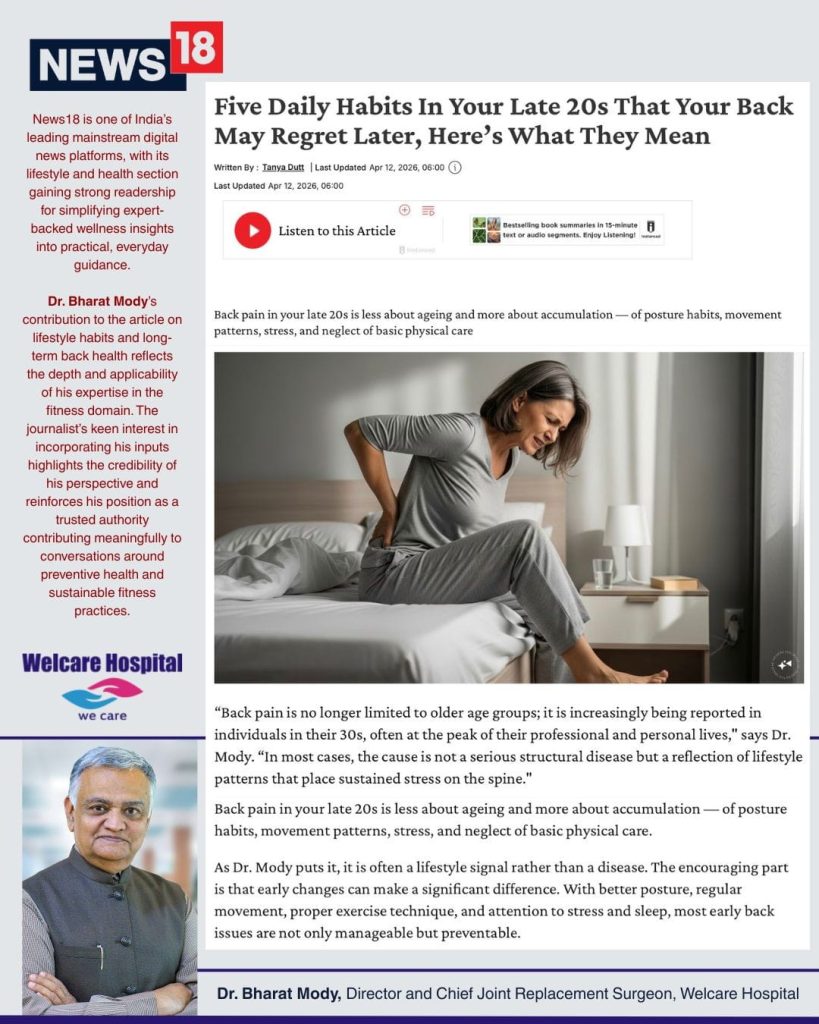
The article by News18 highlights how seemingly harmless lifestyle habits in your late 20s can silently contribute to long-term spinal and back issues later in life.
Here are the Five Major Habits Discussed in the Article:
1. Sitting for Long Hours Without Movement
Modern desk jobs, binge-watching, and prolonged screen time are placing constant stress on the spine.
Poor posture and extended sitting can:
- Weaken core muscles
- Tighten hip flexors
- Increase pressure on spinal discs
- Lead to chronic lower back pain over time
Experts stress the importance of standing, stretching, and moving regularly throughout the day.
2. Constant Phone & Laptop Posture (“Tech Neck”)
Looking down at phones or hunching over laptops creates strain on the neck, shoulders, and upper back.
This repetitive posture can contribute to:
- Neck stiffness
- Rounded shoulders
- Headaches
- Early spinal alignment problems
The article notes that digital lifestyles are accelerating posture-related orthopaedic concerns among younger adults.
3. Skipping Exercise & Strength Training
Many people in their 20s focus on work schedules and convenience, while physical movement becomes inconsistent.
Weak muscles — especially around the core and back — reduce spinal support and increase injury risk later.
Strength training, mobility work, and posture-focused exercises are recommended for long-term spinal health.
4. Ignoring Early Signs of Back Pain
Young adults often dismiss back pain as “temporary stress” or fatigue.
However, recurring stiffness, discomfort, or pain may signal:
- Muscle imbalance
- Poor posture
- Early disc strain
- Sedentary lifestyle damage
The article emphasises early intervention instead of waiting until pain becomes chronic.
5. Poor Sleep Setup & Lifestyle Habits
Sleeping on unsupportive mattresses, poor sleeping posture, stress, lack of recovery, and unhealthy routines can gradually affect spinal health.
Combined with long work hours and reduced movement, these habits may worsen long-term musculoskeletal issues.
Why This Matters in Your Late 20s
According to experts quoted in the article, the late 20s are often when lifestyle-related spinal stress begins accumulating silently.
The effects may not feel serious immediately, but years of poor posture, inactivity, and digital dependency can later contribute to:
- Chronic back pain
- Cervical issues
- Disc problems
- Reduced mobility
- Orthopaedic complications in the 30s and 40s
Key Takeaway
The article ultimately highlights that spinal health is shaped by everyday habits, not just injuries or ageing.
Simple preventive actions such as:
- Regular movement
- Better posture
- Strength training
- Ergonomic work setups
- Stretching and recovery
can significantly reduce long-term back and neck problems.